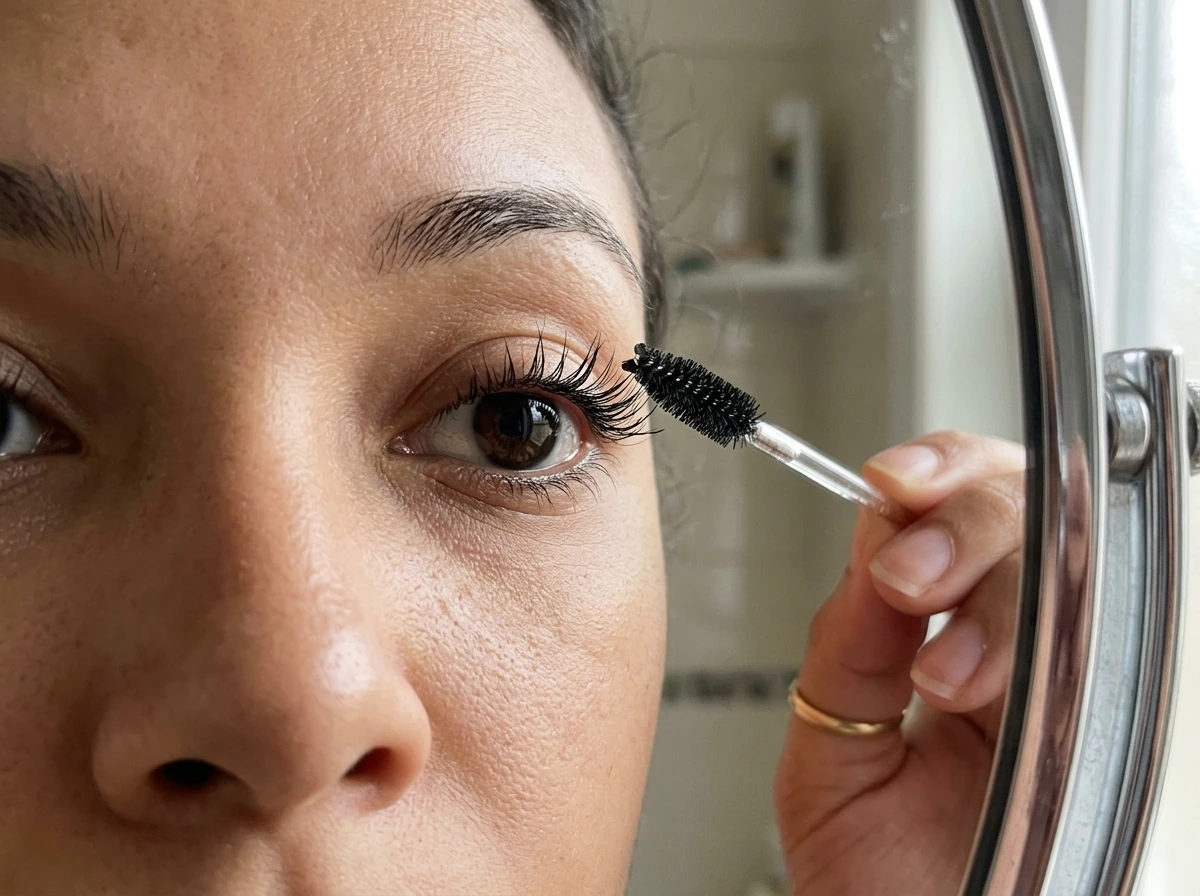
Here is the direct answer: eyelashes do not typically grow back thicker than they were before as a biological rule. What most people are noticing when lashes look fuller after a period of loss or damage is a combination of better lash length, less breakage, and more lashes completing their growth cycle simultaneously. That said, there are real, evidence-backed ways to make lashes appear significantly fuller, and one prescription option can genuinely increase lash thickness. The difference between truly thicker lashes and lashes that simply look fuller matters a lot when you are trying to figure out what to do next.
Do Eyelashes Grow Back Thicker? What to Expect and What Works

Rachel Nguyen
24 Mar 2026
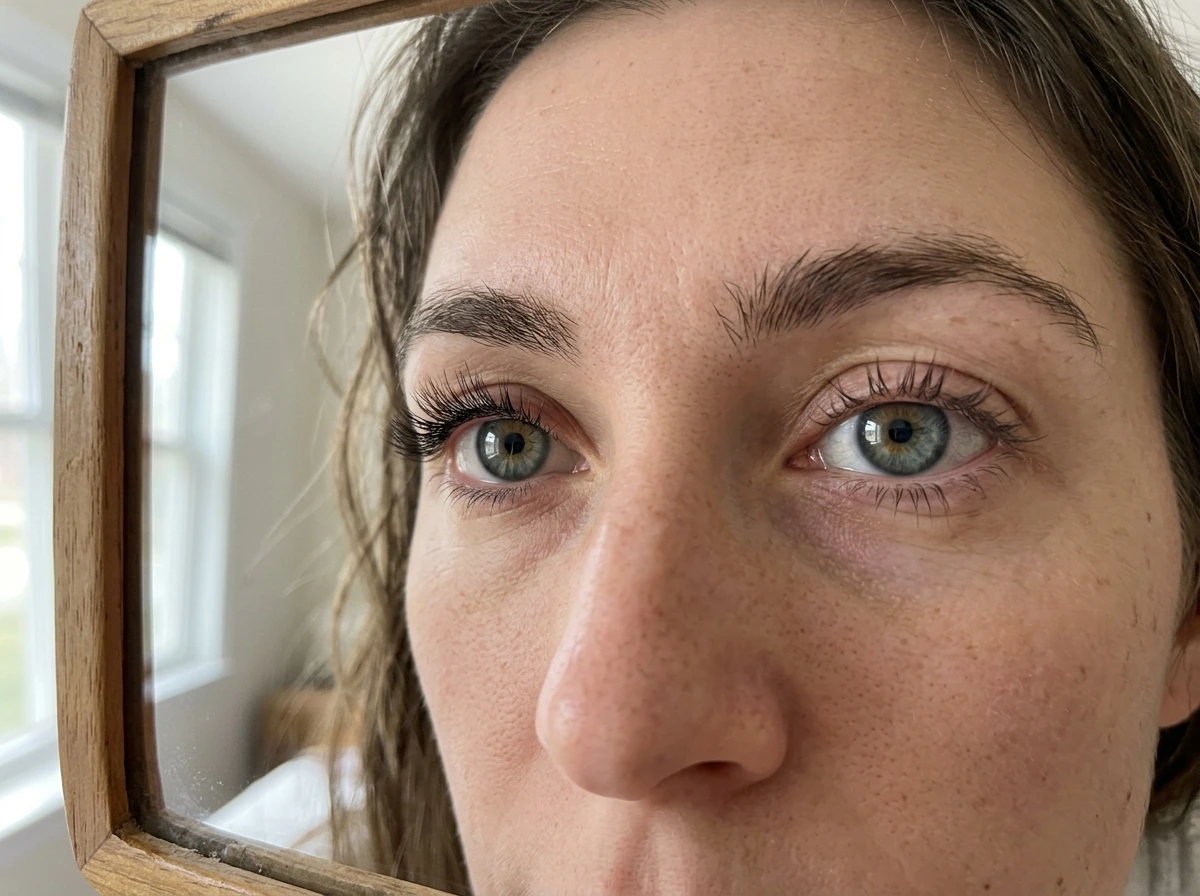
Can eyelashes actually regrow thicker? The real answer
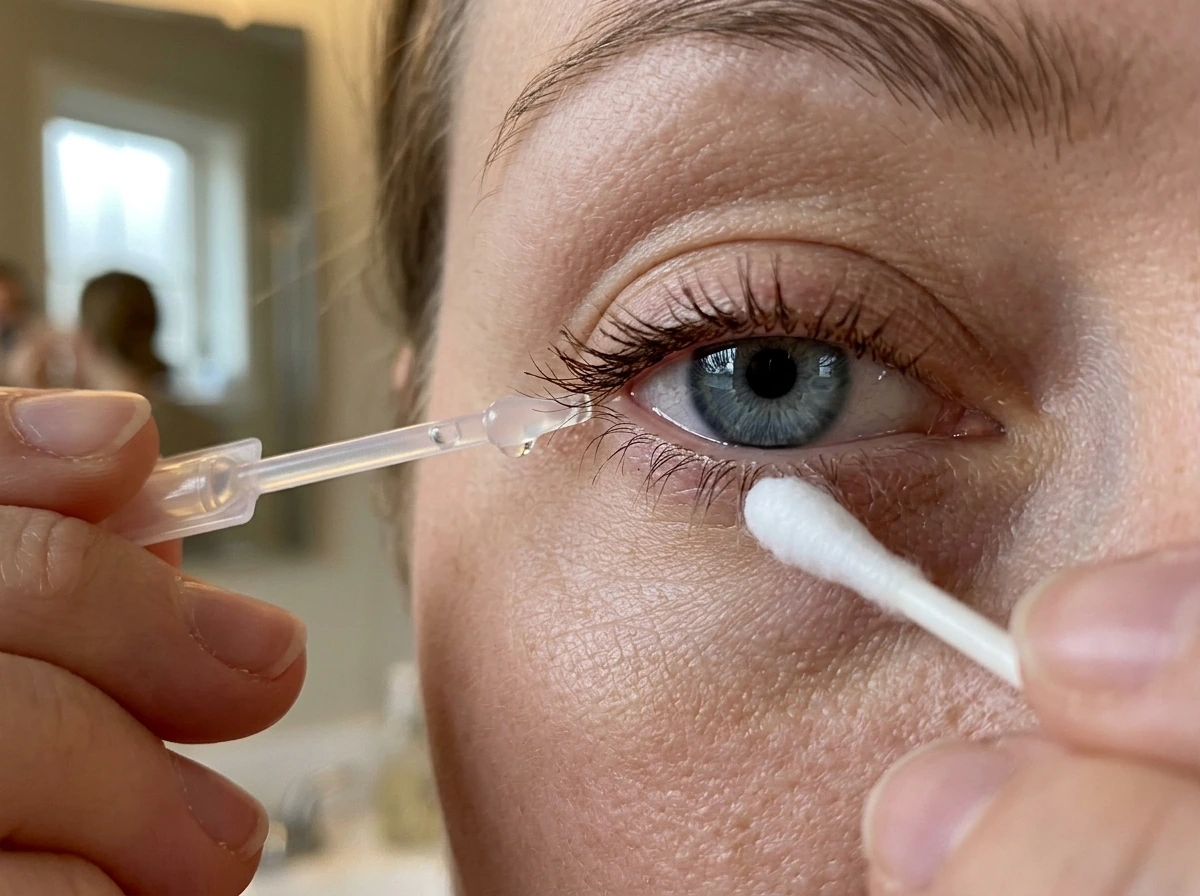
Your eyelash thickness is primarily determined by your follicle size, which is largely genetic. When a lash sheds and a new one grows in, it comes from the same follicle, so it will be roughly the same diameter as the one before it. Damage from over-tweezing, rubbing, or harsh extension removal does not cause follicles to suddenly produce thicker strands. If anything, repeated trauma to the follicle can do the opposite over time.
Where things get more nuanced: if your lashes have been looking thin because of breakage, brittleness, or a health-related cause, restoring them to their full, undamaged state can absolutely make them look dramatically fuller. A full-length, unbroken lash looks much thicker than a stub or a shaft that has snapped halfway. So the appearance of thickness can improve significantly even without the follicle changing. That is not a consolation prize. It is actually good news, because it means the goal is achievable.
The one real exception is prescription bimatoprost (Latisse), which has been shown in clinical trials to increase lash length, thickness, and darkness by altering the hair growth cycle. More on that below. But for the average person dealing with post-extension thinning, some rubbing-related breakage, or lashes that just never felt full, the path to fuller lashes is about reducing further damage and supporting healthy regrowth rather than hoping the follicle produces something it never has.
What actually controls lash thickness: follicles, cycles, and damage
Eyelashes go through three growth phases: anagen (active growth), catagen (transition), and telogen (resting and eventual shedding). Research characterizing human eyelash follicle biology puts the average anagen phase at about 34 days, with the full cycle averaging around 90 days and a growth rate of roughly 0.12 mm per day. Crucially, each follicle cycles independently, which is why you do not lose all your lashes at once and why you always have lashes at different stages of growth.
Follicle health is the core variable here. A healthy follicle in a normal anagen phase will produce the lash it is genetically programmed to produce. Damage changes the equation. Clinically, eyelash loss (called madarosis) is classified as either scarring or non-scarring. Non-scarring causes, like blepharitis, nutritional gaps, stress, or mechanical damage from extensions or rubbing, do not destroy the follicle, so regrowth is possible once the cause is removed or treated. Scarring causes, which can come from severe burns, certain infections, or chronic inflammatory conditions left untreated, can permanently destroy the follicle structure. In those cases, regrowth is not expected.
Chronic eyelid inflammation is a bigger culprit than most people realize. Conditions like blepharitis, which involves inflammation of the eyelid margin, can directly damage lash follicles over time. Recurrent ulcerative blepharitis can cause eyelid scarring and misdirected or lost lashes. Even lower-grade chronic inflammation from meibomian gland dysfunction or allergic contact dermatitis (sometimes triggered by lash extension adhesives) can contribute to progressive lash thinning if it goes unaddressed. If your lashes have been thinning slowly over months and you also deal with eyelid irritation, redness, or flaking, that is a clinically relevant pattern worth noting.
How long regrowth takes and what to expect week by week
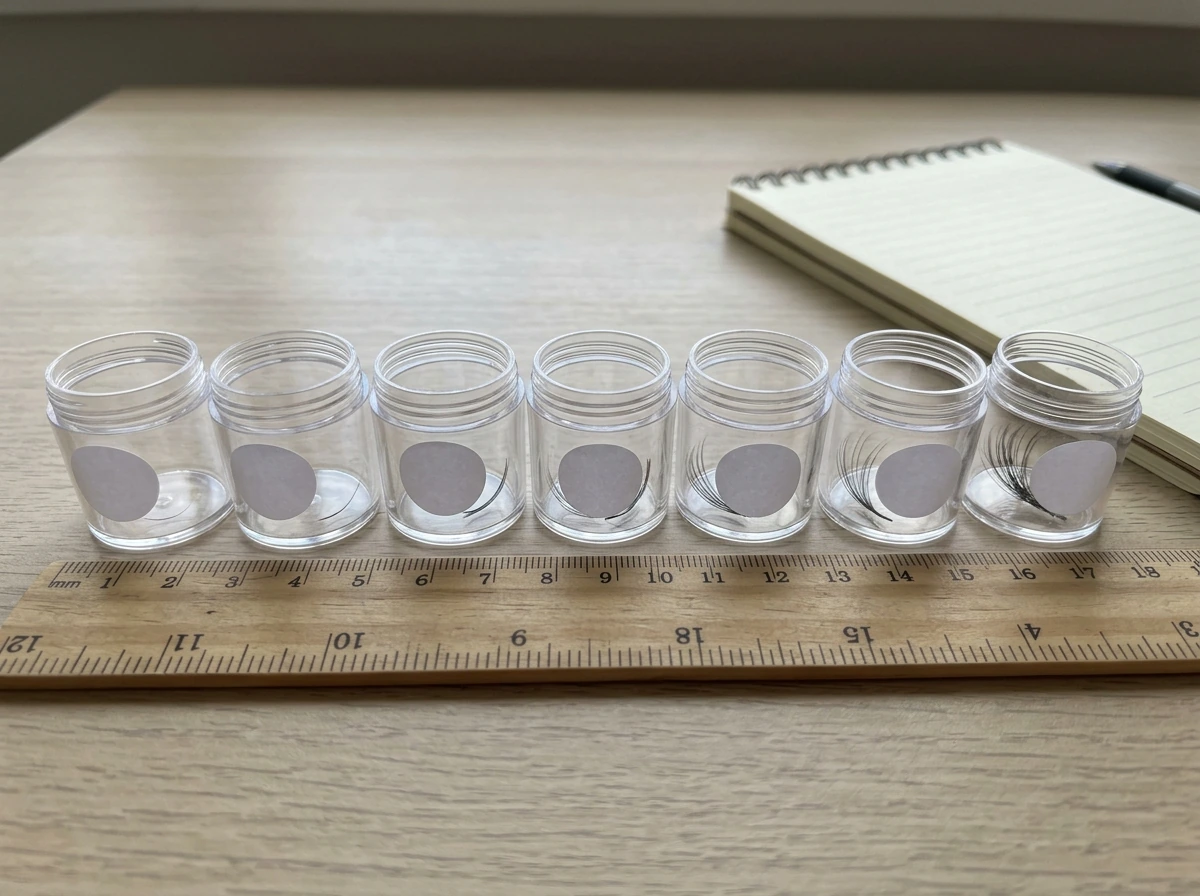
Based on the biology, a full eyelash cycle runs about 90 days on average. That is roughly three months from follicle activation to a full-length new lash. If you have lost lashes or your lashes have broken significantly, maybe even from cutting, you are looking at that kind of timeline before you see a meaningful improvement in density and appearance. Here is how the weeks typically break down:
- Weeks 1 to 2: Not much visible change. New anagen-phase lashes may begin emerging but are too short to see clearly or contribute to fullness.
- Weeks 3 to 4: Tiny new lash stubs may become visible. The lash line may still look sparse, especially if many follicles were affected.
- Weeks 5 to 8: Noticeable regrowth in most follicles. New lashes are growing in length but still shorter than mature lashes. The line starts looking more populated.
- Weeks 9 to 12: Most new lashes are approaching or at full length. Density looks closer to normal. Lashes grown from follicles that had been in telogen are now fully visible.
- Weeks 12 to 16: Full recovery in non-scarring cases, assuming the original cause has been addressed and no further trauma is occurring.
This timeline assumes you are not continuing to damage the follicles during the regrowth period, which is the part most people underestimate. Rubbing your eyes, using an eyelash curler aggressively on fragile new growth, or continuing with extensions before lashes have recovered can reset the clock. If you want to read more about timelines for specific causes, there is more detail in our guides on how long lashes take to grow back and ...whether lashes can grow back in 2 weeks.
At-home steps to reduce breakage and help lashes look fuller now
The most impactful thing you can do today is stop the damage. That sounds obvious, but a lot of people are unknowingly continuing the behavior that caused thinning in the first place while also trying to use serums to fix it. These habits make the biggest practical difference:
- Remove eye makeup gently and completely every night. Leftover mascara and liner dry out lash shafts and increase brittleness. Use a dedicated eye makeup remover and press a soaked cotton pad to the eye for 20 to 30 seconds before wiping, rather than scrubbing.
- Avoid waterproof mascara during recovery. The solvents needed to remove it are harsh and the removal process increases mechanical stress on the lash shaft.
- Do not use an eyelash curler on short or fragile regrowth. If you do use one, apply it gently before mascara, not after.
- If you have been using extensions, give lashes a full 8 to 12 week break before reapplying. Extension adhesives can cause allergic blepharitis and contact dermatitis, which worsen lash loss.
- Sleep on a silk or satin pillowcase. It sounds minor but cotton pillowcases create friction on lashes during sleep and can cause repeated mechanical breakage over time.
- Do not rub your eyes. This is probably the hardest habit to break, but rubbing is one of the most common causes of repeated lash breakage and follicle irritation.
Beyond stopping damage, you can support lash health through nutrition. Lash follicles need protein, iron, and a range of vitamins to produce strong hair shafts. If your diet has been limited or you have been under significant stress, a general multivitamin addressing common nutritional gaps is reasonable. Just do not expect a supplement to do anything dramatic if your follicles are healthy and the real issue is mechanical damage or inflammation.
Lash serums vs castor oil vs biotin: what actually works
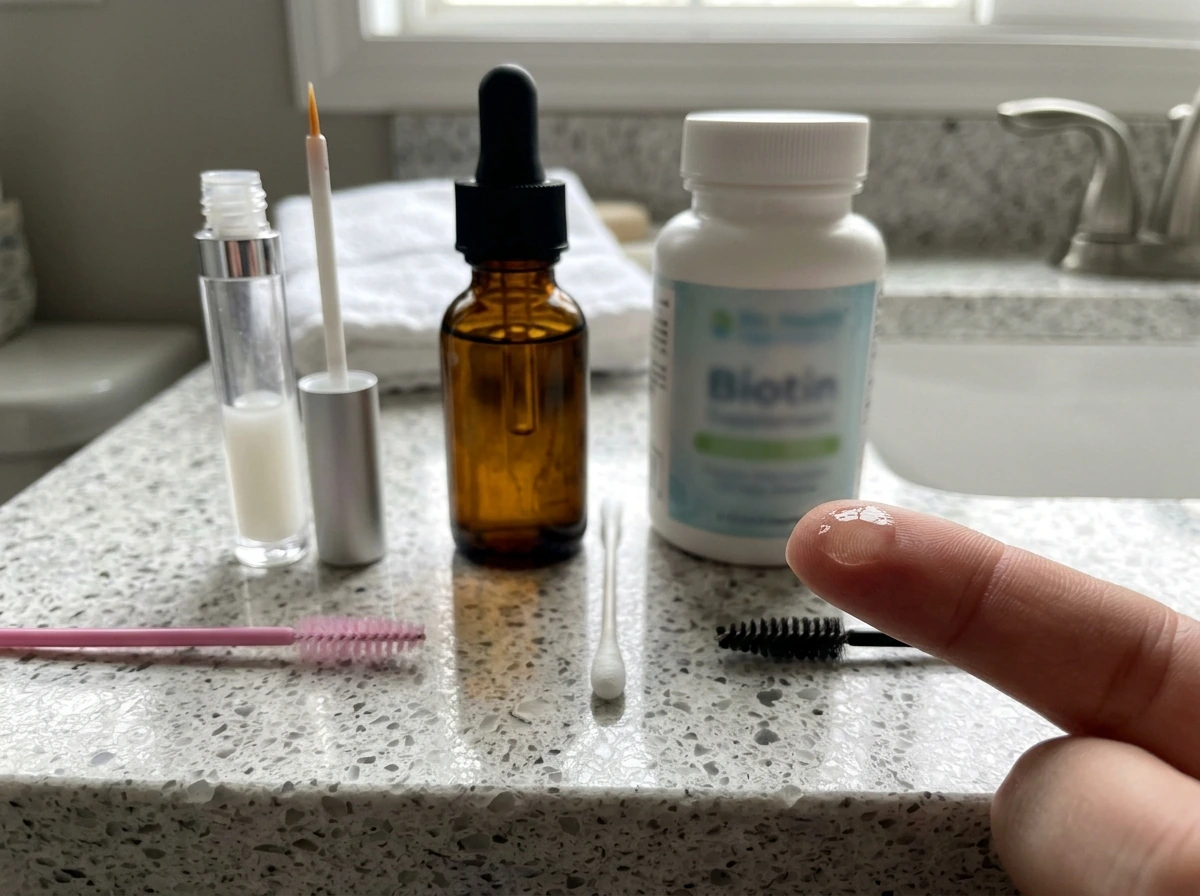
This is where a lot of conflicting information exists, so here is an honest breakdown of what the evidence actually says for each option.
| Option | Evidence Level | What It Can Realistically Do | Key Limitation |
|---|---|---|---|
| Bimatoprost (Latisse) | Strong: FDA-approved, multiple RCTs | Increases lash length, thickness, and darkness in 12 to 16 weeks | Prescription only; side effects include iris pigmentation, orbital fat changes, and eye irritation; results reverse after stopping |
| OTC serums with peptides/conditioning agents | Weak: limited clinical proof for true thickness change | May condition and reduce breakage, improving appearance of fullness | No prostaglandin analog = much weaker effect on the growth cycle itself |
| OTC serums with prostaglandin-like analogs | Moderate, but risky | May mimic Latisse effects to some degree | Not FDA-regulated for this use; regulators in multiple countries have warned against uncontrolled prostaglandin use in cosmetics |
| Castor oil | Minimal: no strong clinical evidence for growth | May help eyelid margin inflammation in blepharitis cases; conditions the lash shaft | Not a proven growth stimulant; may improve appearance by reducing dryness |
| Biotin (oral supplement) | Weak: only relevant in true deficiency | Corrects hair changes caused by biotin deficiency | If you are not deficient, supplementing more biotin does not grow thicker or longer lashes |
Bimatoprost (Latisse): the strongest option, with caveats
Bimatoprost 0.03% (sold as Latisse) is the only FDA-approved treatment for eyelash hypotrichosis and the only option with robust clinical trial data showing actual increases in lash length, thickness, and darkness. Its mechanism is understood: it prolongs the anagen phase, meaning more follicles are actively growing at any one time and for longer. Phase 3 trials showed significant improvements at 16 weeks of once-nightly application to the upper eyelid margin. The important catch: once you stop using it, lashes return to their pre-treatment baseline. This is a maintenance treatment, not a permanent fix. It also requires a prescription and carries real risks, including iris color change, orbital fat atrophy, and eye irritation.
Castor oil: conditioning, not a growth miracle
Castor oil does not have strong scientific evidence behind it as a lash growth stimulant. There are no well-designed studies proving it makes follicles produce more or thicker lashes. That said, one randomized trial found that topical periocular castor oil improved eyelid margin findings in blepharitis patients, including measures of eyelash loss. That suggests it may help when thinning is related to lid margin inflammation rather than being a direct growth promoter. If you want to try it, apply a very small amount to a clean spoolie and brush it onto the lash line. Do not get it into the eye itself, as it can cause blurry vision and irritation.
Biotin: only useful if you are actually deficient
Biotin deficiency is associated with hair changes, but deficiency is genuinely rare in people eating a normal varied diet. If your lashes are thinning because of biotin deficiency, supplementing will help. If you are not deficient, taking more biotin is not going to stimulate lash growth or thickness. The research does not support that. It is one of those supplements that got attached to beauty claims without the science to back them up for people with normal biotin levels.
How to use these products safely without making things worse
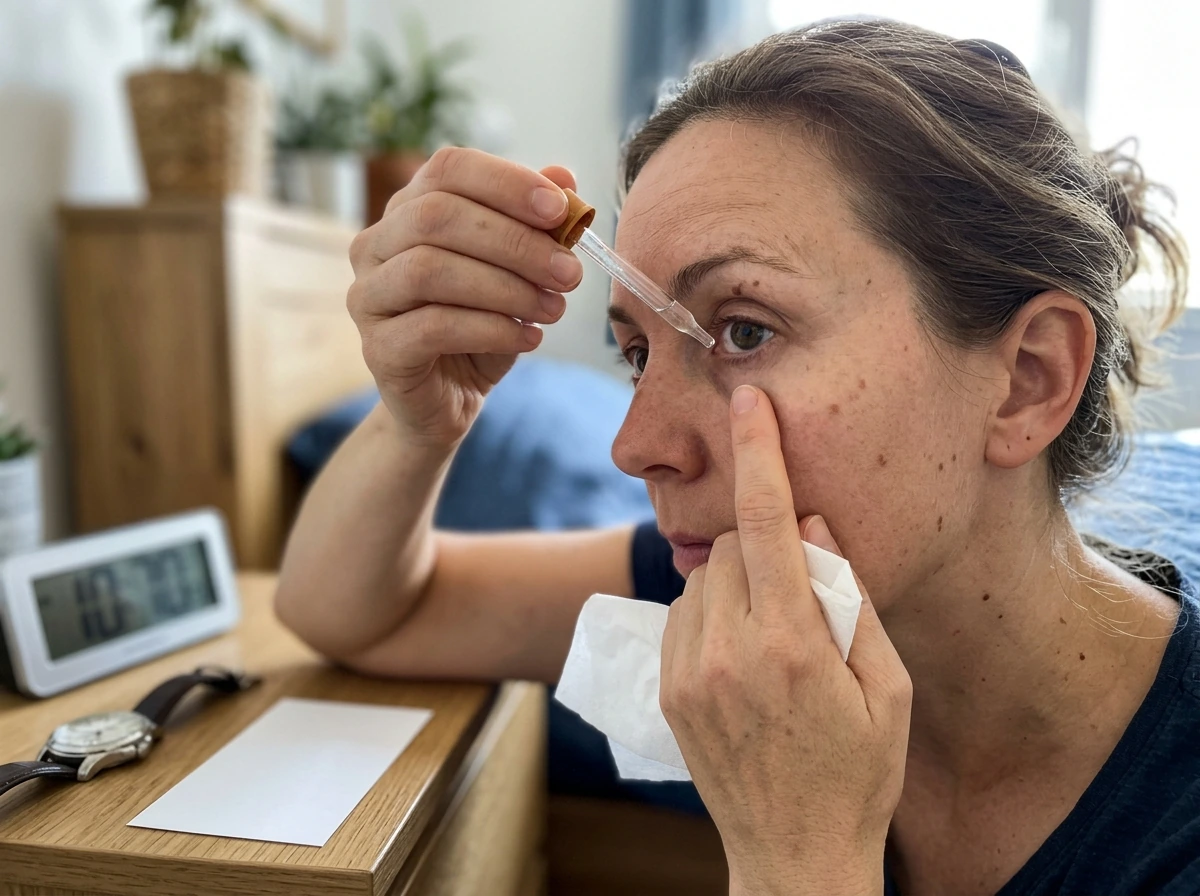
Application method matters enormously around the eye area, where skin is thin and proximity to the ocular surface creates real irritation risk. Whether you are using a prescription serum or an OTC product, these steps apply:
- Patch test first. Apply a small amount of any new product to the inner arm or behind the ear for 24 to 48 hours before using it near your eyes. Allergic reactions near the eye can be serious.
- Apply to clean, dry skin only. Residual makeup remover, oils, or moisture can dilute the product or carry it into the eye.
- Use the minimum effective amount. For bimatoprost, the prescribing guidance is one application per night to the upper eyelid margin at the base of lashes using the supplied single-use applicator. More is not better and increases the risk of side effects.
- Apply to the upper eyelid only. Bimatoprost guidance specifically states it should not be applied to the lower eyelid. Allowing product to migrate into the eye increases the risk of iris pigmentation and other ocular effects.
- Use once nightly, not more. Bimatoprost should not be used more than once daily. Over-application does not accelerate results.
- If you wear contact lenses, remove them before application and wait at least 15 minutes before reinserting.
- Stop immediately and see a doctor if you develop significant redness, swelling, or persistent irritation around the eye area.
For OTC serums that contain prostaglandin-like analogs (some products include isopropyl cloprostenate or similar compounds without FDA approval for this use), be aware that regulatory agencies in multiple countries have issued warnings about these ingredients in cosmetic lash products. The risk profile is similar to prescription bimatoprost but without the clinical oversight. If an OTC serum is giving you dramatic results very quickly, it is worth looking at the ingredient list carefully.
If you are pregnant or trying to conceive, skip bimatoprost. Animal studies raised concerns about early delivery and fetal effects, and the prescribing information recommends using it during pregnancy only if the benefit clearly justifies the risk. That risk-benefit calculation does not favor cosmetic lash improvement.
When to see a doctor instead of treating this yourself
Most eyelash thinning from extensions, rubbing, or mechanical damage resolves on its own once you stop the cause and give it time. But some situations genuinely need a clinician, and waiting too long can mean the difference between reversible and irreversible follicle damage.
- Lashes have been thinning progressively for more than 3 months without an obvious cause like extensions or mechanical trauma.
- You have eyelid redness, flaking, crusting, or persistent itching alongside lash loss. These are signs of blepharitis or another inflammatory condition that needs treatment, not just cosmetic management.
- Lashes are falling out in patches or you are noticing bald spots along the lash line.
- You are losing lashes alongside other hair loss on your scalp, brows, or body. Systemic causes like thyroid dysfunction, alopecia areata, or nutritional deficiencies need blood work, not serums.
- You have recently started a new medication and lash thinning followed. Some drugs, including chemotherapy agents and certain anticoagulants, cause eyelash loss and require medical management.
- Three months of careful at-home recovery has produced no visible improvement at all.
- You are considering Latisse. While it requires a prescription and is therefore already gatekept through a clinician, it is worth getting an eye exam before starting, especially if you have a history of eye pressure issues, as bimatoprost is chemically related to glaucoma medications.
A dermatologist can evaluate the lash loss pattern and determine whether you are dealing with non-scarring madarosis (treatable) or something that has caused follicle destruction. An ophthalmologist or oculoplastic specialist is the right referral if there is any concern about the eye surface itself or if you have had repeated blepharitis flares. The clinical distinction between a scarring and non-scarring cause is one that really does need professional evaluation because it determines whether treatment is worth pursuing at all.
Your practical next steps over the coming weeks
If you are starting from a place of damaged, thinning, or sparse lashes right now, here is a realistic plan based on what the biology and evidence actually support:
- Week 1: Stop all active damage. Remove extensions if you have them, switch to a gentle eye makeup remover, stop using an eyelash curler temporarily, and commit to not rubbing your eyes.
- Week 1 to 2: Evaluate whether you have inflammation. If your eyelid margins are red, itchy, or flaky, address blepharitis with warm compresses and eyelid hygiene before adding any serum.
- Week 2 onward: If you want to try castor oil, use it consistently on a clean spoolie every night. Expect conditioning effects and possible improvement if inflammation was a factor, not dramatic growth stimulation.
- Week 2 to 4: If you want to pursue bimatoprost, book a dermatology or ophthalmology appointment. Do not use OTC prostaglandin analogs as an unregulated workaround.
- Week 4 to 12: Stay consistent. This is the hardest part. Lash regrowth is slow and the temptation to use mascara heavily to mask sparse lashes can create more breakage. Use a gentle, non-waterproof mascara if needed.
- Week 12 to 16: Do a proper assessment. Are lashes visibly fuller? Are new lashes completing their growth cycle? If you started bimatoprost, this is the clinical window where significant improvement should be visible.
- If no improvement by month 4: See a dermatologist. At this point, a clinical evaluation is the most useful next step, not trying another serum.
The realistic expectation is this: if your follicles are intact and the underlying cause is addressed, your lashes will return to their natural density over 3 to 4 months. They will not come back thicker than genetics allows, but they can absolutely look fuller than they do right now, and for many people that is exactly what they were hoping for.
FAQ
If my eyelashes look fuller after a few weeks, does that mean they are growing back thicker automatically?
Not necessarily. Early “fullness” often comes from less breakage, lashes reaching their normal unbroken length, and different follicles entering the growth cycle at the same time. True thickness is limited by follicle genetics, so look for signs like fewer broken stubs and reduced shedding rather than expecting the hair diameter to increase.
Can I speed up regrowth if I stop extensions and start using a lash serum immediately?
You can improve the odds, but you cannot compress the follicle cycle much. Anagen still takes weeks to build new length, so most people see meaningful density changes around the 3-month mark. Also avoid adding more mechanical stress early, for example aggressive eyelash curler use, lash brushing with pressure, or removing lashes before they fully shed on their own.
How do I know whether my lash thinning is scarring (not reversible) or just damage and inflammation (reversible)?
A practical clue is whether you have ongoing eyelid symptoms, like chronic redness, flaking, burning, crusting, or recurrent blepharitis. Non-scarring causes are more common, but the key decision point is persistent, progressive loss in the same areas plus signs of chronic inflammation, which should be evaluated by a clinician to check for scarring.
Is it safe to use an eyelash curler while my lashes are regrowing?
It is safer to wait until new lashes are longer and less fragile. Early on, lashes that are actively growing are more prone to snapping. If you do curl, use minimal pressure, avoid pulling at the lash line, and stop if you notice increased shedding or shorter-looking lashes.
Why do my lashes sometimes shed after I stop using a prescription serum like bimatoprost?
Because it works by modifying the growth cycle while you use it. When you stop, lashes typically return to your prior baseline over time. If you are planning to switch treatments, discuss a timing plan with your prescriber rather than stopping abruptly and expecting a permanent change.
What warning signs mean I should see an ophthalmologist quickly, not just try home care?
Seek prompt care if you have eye pain, light sensitivity, significant redness of the eye surface, new vision changes, severe irritation from products or adhesives, or repeated blepharitis flare-ups. Those symptoms raise the chance of inflammation involving the ocular surface, where the treatment path differs.
Can rubbing my eyes cause lash loss even if I am not using extensions?
Yes. Mechanical friction can contribute to repeated micro-trauma at the follicle and lash shaft, leading to breakage and apparent thinning over time. If you notice you rub while sleeping or when removing makeup, changing that habit is one of the highest-impact “treatments” you can do alongside any serum.
Will castor oil thicken lashes, or is it mainly helpful for inflammation-related shedding?
The evidence for direct thickening is weak, but there is some trial data suggesting benefits in blepharitis-related eyelid changes that can include lash loss. If you try it, apply only to the lash line with a clean spoolie and keep it off the eye itself, because irritation can worsen shedding in some people.
Does taking biotin help lash thinning if I do not have a documented deficiency?
Usually no. Biotin deficiency is uncommon in people with a varied diet. If your lashes are thinning from mechanical damage or chronic eyelid inflammation, extra biotin is unlikely to create a noticeable change because it is not addressing the main cause.
Are OTC lash serums with prostaglandin-like ingredients as risky as prescription bimatoprost?
They can be, because these ingredient classes can share similar biological effects and local side effects. If you see rapid, dramatic changes, take that as a signal to carefully review the ingredient list and consider professional guidance, especially if you have any eye irritation or a history of inflammation.
If my lashes only became thin after starting an allergy-prone adhesive or lash glue, what should I do first?
First remove the trigger and give the eyelid a chance to calm, since ongoing contact reactions can feed chronic inflammation. Also avoid “patching” with more adhesive or overlapping products while symptoms are active. If you get recurrent flares, ask a clinician about allergic contact dermatitis testing or a specific inflammation-focused regimen.
Is there a way to measure whether my lashes are improving beyond just visual fullness?
Yes. Take consistent photos in the same lighting and angle every 1 to 2 weeks, and track breakage by counting short snapped lashes versus long intact ones. If you have significant shedding, note how many lashes you see on the pillow or during gentle cleansing, because that helps distinguish regrowth from ongoing damage.
Next Article
Will Broken Eyelashes Grow Back? Timeline and Fixes
See if broken lashes regrow, realistic timeline, blockers like extensions or irritation, and safe fixes to protect growt